


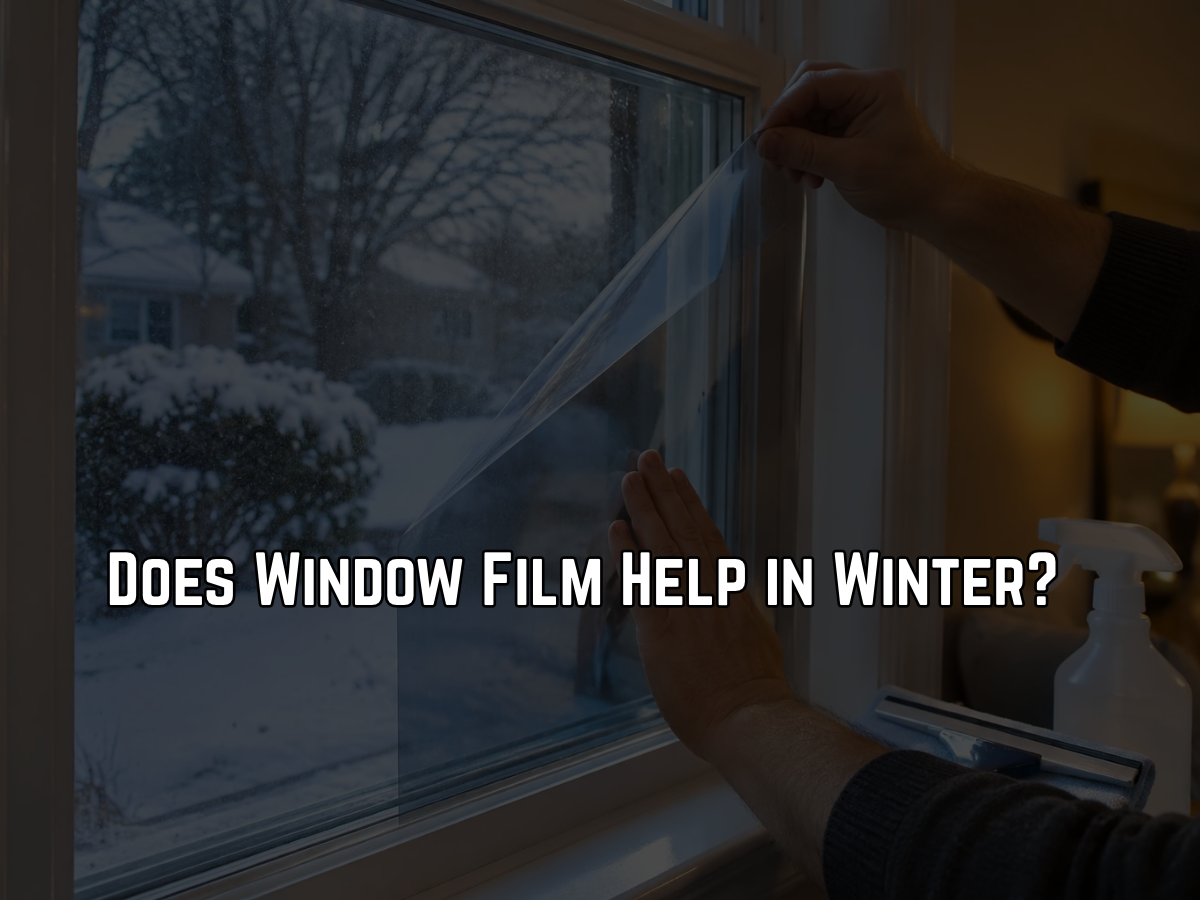
Yes, but only the right kind. A low-emissivity (low-e) window film reflects room heat back inside and can cut heat loss through single-pane glass by roughly 20 to 28%. Standard solar control tint, the kind most homes get for summer heat, does very little to hold heat in and can even block some free warmth from the winter sun. So the honest answer depends on which film you mean and what glass it goes on.
Here’s how each type behaves once the temperature drops, and how to tell whether residential window tinting makes sense for your home in winter or mostly pays off in summer.
Key Takeaways
- Low-e film is the only applied film built to reduce winter heat loss. It works by reflecting long-wave infrared heat back into the room.
- Single-pane windows gain the most. On double-pane glass the benefit shrinks, and on windows with a factory low-e coating it’s small.
- Regular solar tint mainly blocks heat coming in. In winter, that can slightly raise heating use on sunny south-facing windows.
- Film doesn’t seal drafts or fix fogged, failed glass units.
- In a mild-winter climate like Greenville’s, summer savings usually decide the case. Winter is a bonus, not the headline.
Not All “Window Film” Works the Same in Winter
People use “window film” for three very different products. That’s where most of the confusion starts.
| Film type | How it works in cold weather | Effect on winter heat loss | Best for |
|---|---|---|---|
| Low-e (insulating) film | Reflects room heat back inside | Moderate reduction, best on single-pane glass | Year-round comfort and heating savings |
| Solar control tint (dyed, ceramic, spectrally selective) | Blocks incoming solar heat and UV | Little to none; may block useful sun | Summer heat, glare, fading |
| Heat-shrink plastic kits | Traps an air gap over the window | Large while installed | Cheap, temporary fix for drafty single-pane windows |
Plastic shrink kits aren’t really tint. They’re a seasonal plastic sheet taped to the frame. They work because of the trapped air pocket, not the plastic itself, and New Zealand’s energy agency found that this kind of secondary glazing can reduce heat loss through glass by about 60%. The trade-off is obvious: they look like plastic wrap, block the view a bit, and come down every spring.
How Low-E Film Keeps Heat Inside
Your furnace warms the air, but it also warms walls, furniture and people. All of those give off invisible infrared heat, and ordinary glass absorbs it and passes it outside. That’s why you feel a chill sitting next to a big window even when the thermostat says 70°F.
Emissivity measures how readily a surface gives off that heat. In federal testing, a typical applied tint had a room-side emissivity of 0.84, about the same as bare glass. The low-e film GSA tested measured 0.048. Instead of soaking up room heat, the glass bounces most of it back.
GSA’s conclusion is the number that matters. On single-pane windows, the film nearly doubled the glass’s insulating performance, getting close to what a double-pane window delivers. That’s a big jump for a product thinner than a credit card.
Your Existing Windows Decide How Much It Helps
This is the part most “window film in winter” articles skip. The glass you already have matters more than the film you pick.
| Your windows | What low-e film does in winter | Worth it for heat alone? |
|---|---|---|
| Single-pane clear glass | Biggest gain, around 20 to 28% less heat loss through the glass | Often yes |
| Double-pane, no factory low-e coating | Smaller gain, around 12 to 15% | Sometimes |
| Double-pane with factory low-e coating | Little extra insulation | Rarely |
| Drafty frames or fogged glass | Can’t fix air leaks or broken seals | No |
Ranges drawn from EECA’s winter field study (about 20% average on single glazing, up to 25%) and published low-e film specs (23 to 28% on single glazing, 12 to 15% on double).
Single-pane glass is more common than people assume. According to the South Carolina Energy Office, about 40% of windows in existing U.S. homes are still single-pane, and windows drive 25 to 30% of residential heating and cooling energy use. Older homes around the Upstate with original windows are exactly where low-e film earns its keep.
If your home has newer double-pane windows, check whether the glass is already low-e before adding film. Some films aren’t approved for certain insulated units, which is why a compatibility check matters. We cover that in detail in can you tint dual-pane or low-e windows.
The Winter Trade-Off With Regular Solar Tint
Here’s the catch with standard tint. It’s designed to keep the sun’s heat out, and it doesn’t switch off in December.
On a clear winter afternoon, a south-facing window can pull in a surprising amount of free solar heat. A strong solar film blocks part of that. GSA’s solar film research found exactly this: cooling savings were partly offset by higher heating use in winter. Low-e film is less exposed to this problem because its insulating effect makes up for the lost sunlight. The same GSA work is broken down for business buildings in our post on whether tinting office windows reduces energy bills.
Does that mean solar tint is a bad idea? Not really. In a hot climate with short winters, the summer savings usually outweigh the small winter penalty by a wide margin. It just means south-facing rooms deserve a more thoughtful film choice. Our guide on choosing window film based on your home’s orientation walks through it side by side.
What Winter Actually Looks Like in Greenville
Greenville winters are short and fairly gentle. January, the coldest month, averages a low around 33°F and a high near 50°F, and snow is uncommon. Compare that with a long, humid summer that keeps air conditioners running from May into September.
What does that mean for film? For most Upstate homes, the decision should be made on summer heat, glare and UV. Winter performance becomes the tiebreaker. Interestingly, the state’s own energy guidance recommends both: sun-control film on south-facing windows for summer, and low-e film on the inside of windows to keep heat from radiating out.
The homes where winter really changes the math are older ones with single-pane glass, big picture windows, or sunrooms that turn cold the minute the sun sets.
Winter Benefits That Have Nothing to Do With Heat
Even standard solar film earns its place in winter, just not through insulation.
Low sun, more glare. The winter sun sits lower in the sky, so it shines straight into rooms and across TV and computer screens for more of the day. Film takes the edge off without closing the blinds.
UV doesn’t take the season off. Floors, rugs and upholstery keep fading in winter, especially in rooms that get long angled light. Quality films block over 99% of UV. If you’ve already noticed lighter patches on your hardwood, read are your windows fading your floors and furniture.
Comfort near the glass. Low-e film warms the glass surface you “feel” from the couch, which reduces that cold-radiating window effect.
One quirk worth knowing: reflective films give daytime privacy, but at night, with lights on inside, the effect flips and people outside can see in. Winter means longer evenings, so plan on blinds or curtains if privacy after dark matters.
What Window Film Won’t Fix
Film works on the glass. A lot of winter heat loss happens somewhere else.
- Drafts and air leaks. Gaps around sashes and frames need weatherstripping or caulk. Film won’t stop moving air.
- Fogged double-pane windows. Moisture between the panes means the seal has failed. That unit needs repair or replacement.
- Condensation on single-pane glass. EECA noted that low-e film on single glazing can, under some conditions, make the inner surface slightly cooler and raise the chance of condensation. Kitchens, bathrooms and rooms with poor ventilation are where to watch for it.
- Badly worn windows. Rotting frames or broken balances are a replacement job. Our comparison of window film vs. window replacement breaks down when each makes more sense.
So, Is Window Film Worth It for Winter?
| Your situation | What makes sense |
|---|---|
| Single-pane windows, cold rooms, high heating bills | Low-e film, ideally after sealing drafts |
| Newer double-pane low-e windows | Choose film for summer heat, glare and UV; expect little winter change |
| Sunny south-facing rooms you rely on for winter warmth | A lighter spectrally selective or low-e film, not a dark solar film |
| Drafty windows you plan to replace soon | A temporary plastic kit or weatherstripping for now |
| Fogged glass or rotting frames | Repair or replace first |
Frequently Asked Questions
Does window tint make a house colder in winter?
Standard tint can make sunny rooms feel slightly cooler on bright winter days because it blocks some solar heat. It doesn’t make the house lose heat faster. Low-e film works the other way and helps rooms hold heat after dark.
Should I remove window film in the summer or winter?
No. Professionally installed film stays on year-round, and low-e film is designed to work in both seasons. It reflects room heat back in during winter and rejects solar heat during summer.
Can window film be installed in winter?
Yes. Residential film goes on the inside of the glass, where the home is heated. Curing can take a little longer in cold, damp weather, so a light haze or small water pockets may stick around for a few extra days before clearing.
Is low-e film the same as low-e glass?
Same idea, different location. Factory low-e glass has the coating sealed between two panes, which protects it and pairs it with an insulating gas gap. Low-e film puts a durable coating on the room side of your existing glass. Factory glass performs better overall, while film costs far less and avoids tearing out windows.
The Bottom Line
Window film can help in winter, but only low-e film meaningfully reduces heat loss, and it pays off most on single-pane glass. Standard solar tint is still a strong choice in a warm-summer place like Greenville; just think of its winter role as glare control, UV protection and comfort, not insulation. If you’re unsure what your glass already has, start there. It’s the single biggest factor in whether film will make a noticeable difference this winter.
